
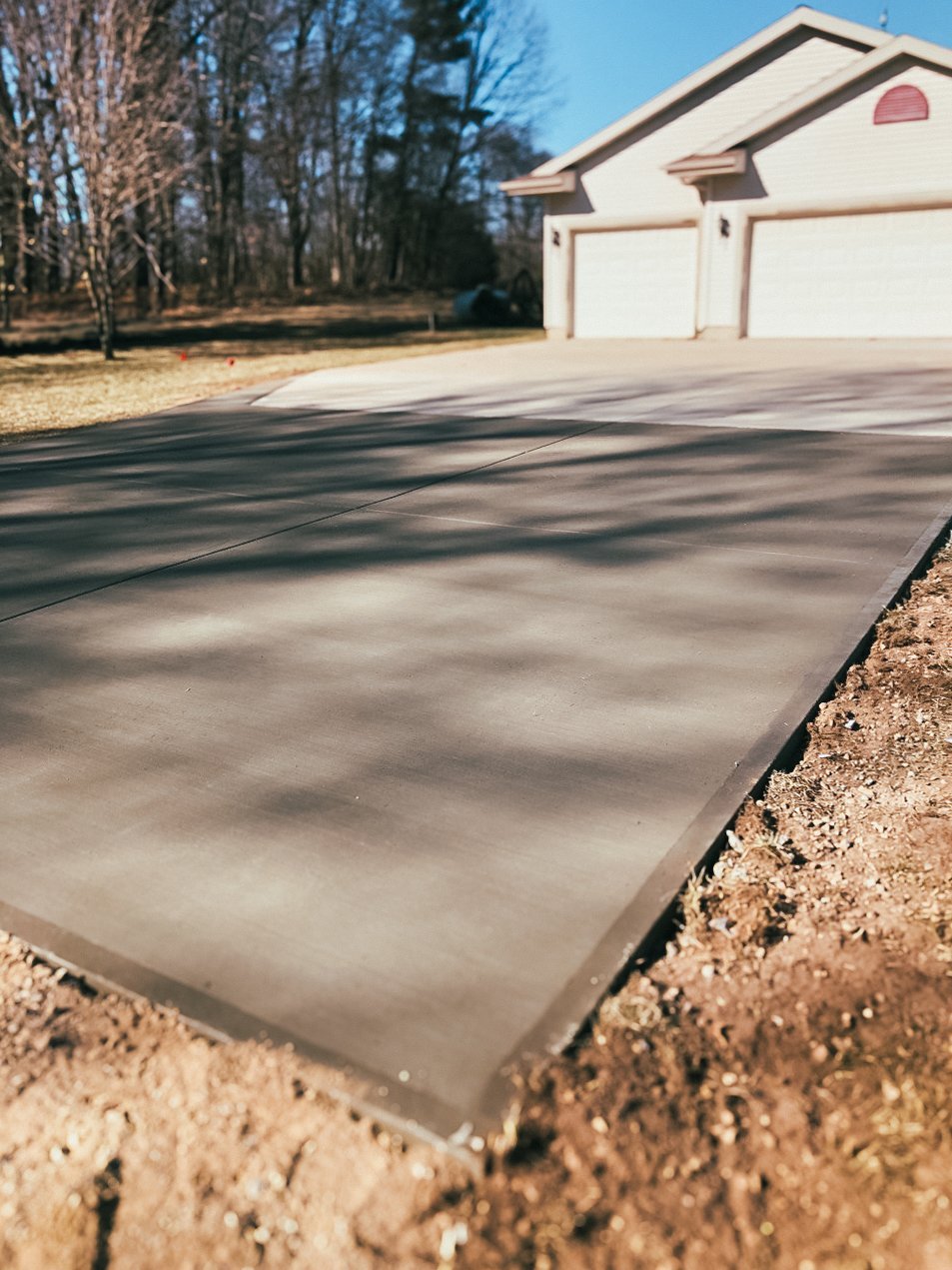
Concrete thickness is one of the most commonly misunderstood aspects of construction. Many assume that simply pouring a thicker slab automatically creates a stronger floor. While thickness matters, it is only one part of a much larger structural equation.
The true performance of a concrete slab depends on how it is designed, reinforced, and supported. Understanding what goes into a durable slab helps property owners make better decisions for garages, pole barns, workshops, and commercial spaces.
Thickness Is About Load, Not Preference
Concrete thickness should always be determined by intended use. A residential driveway does not require the same structural support as a workshop housing heavy equipment.
The weight placed on the slab, whether from vehicles, machinery, storage racks, or concentrated point loads, determines how thick the concrete needs to be. Simply increasing thickness without considering load distribution can lead to unnecessary cost without meaningful performance improvement.
A properly designed slab matches thickness to function rather than relying on a one size fits all approach.
The Role of Subgrade Preparation
Even the thickest slab can fail if the base beneath it is unstable. Subgrade preparation plays a critical role in long-term durability.
Proper compaction ensures that soil does not shift after the slab is poured. A well-prepared gravel base improves drainage and distributes weight more evenly across the ground. Without adequate preparation, settling and cracking become far more likely regardless of slab thickness.
Concrete performs best when it rests on a stable, properly prepared foundation.
Reinforcement and Crack Control
Thickness alone does not prevent cracking. Concrete naturally shrinks as it cures, and environmental changes cause expansion and contraction over time.
Reinforcement materials such as rebar or fiber additives help manage this movement. Control joints are strategically placed to guide where minor cracking occurs, preventing random structural damage.
A reinforced slab with proper joint spacing often performs better than a thicker slab poured without thoughtful reinforcement planning.
Long Term Performance Over Short Term Savings
In many projects, concrete decisions are influenced by short-term budget concerns. Reducing thickness or skipping reinforcement may lower initial cost, but these choices can lead to repairs, surface deterioration, or even premature replacement.
Concrete is a foundational element of any building. It supports structural framing, equipment, and daily use. Designing it correctly from the start protects the investment above it.
When slab thickness, reinforcement, and base preparation are aligned with intended use,
Concrete thickness is important, but it is only one factor in building a durable slab. Load requirements, subgrade preparation, reinforcement strategy, and joint planning all contribute to long-term performance.
A slab designed around real usage rather than assumptions will always outperform one based on guesswork. For projects requiring concrete built to handle daily demands, careful planning makes all the difference.
