
Comparing the 4 Most Common Types of Building Insulation
When it comes to insulating a home, commercial building, or custom workshop, choosing the right material directly impacts your energy bills, indoor comfort, and moisture control. While traditional fiberglass batts remain common, advanced spray foam insulation and rigid foam boards deliver vastly different levels of thermal performance.
Understanding how each material performs helps property owners make smart, long-term investments. Here is a detailed breakdown of the four primary insulation types used in modern construction.
1. Fiberglass Insulation
Overview & Application
Fiberglass insulation is composed of fine glass fibers spun into flexible batts or rolls. It is traditionally installed between wood studs in walls, attic floors, and crawl spaces.
Pros & Cons of Fiberglass
- Pros: Highly affordable upfront cost, widely available at hardware stores, easy to handle for simple DIY projects, non-combustible, and inherently fire-resistant.
- Cons: Does not seal air leaks or stop drafts. It easily sags, settles, or compresses over time, significantly dropping its effective R-value. Glass fibers can also cause skin, eye, and respiratory irritation during installation.
Best Use Cases
Best suited for budget-constrained projects, temporary fixes, interior wall sound-dampening, and filling pre-existing standard stud cavities where air sealing is not a critical factor.
2. Cellulose Insulation (Blown-In)
Overview & Application
Cellulose insulation consists of recycled paper products (primarily newsprint) treated with borate compounds for fire, mold, and pest resistance. It is typically blown into attic spaces or dense-packed into closed wall cavities.
Pros & Cons of Cellulose
- Pros: Eco-friendly recycled composition, better cavity coverage than fiberglass batts, and effective at reducing sound transmission between rooms.
- Cons: Highly absorbent. If exposed to roof or plumbing leaks, cellulose holds moisture, which can cause structural rot and mold growth. It also settles significantly over time, creating empty air gaps at the tops of wall cavities.
Best Use Cases
Ideal for attic flat blows, retrofitting older uninsulated walls, and eco-conscious homeowners seeking high recycled content.
3. Rigid Foam Insulation (XPS, EPS, Polyiso Boards)
Overview & Application
Rigid foam insulation comes in dense, solid plastic foam boards (Extruded Polystyrene/XPS, Expanded Polystyrene/EPS, or Polyisocyanurate). It is used extensively on continuous exterior wall sheathing, basements, and under concrete slabs.
Pros & Cons of Rigid Foam
- Pros: High R-value per inch, exceptional compressive strength, and excellent moisture resistance that prevents water absorption in below-grade applications.
- Cons: Higher material cost than fiberglass batts. Requires precise cutting, taping, and foaming at board joints to create a true air barrier.
Best Use Cases
Best for exterior building wraps, basement wall retrofits, foundation perimeters, and under-slab insulation before pouring concrete.
4. Spray Foam Insulation (Open-Cell & Closed-Cell)
Overview & Application
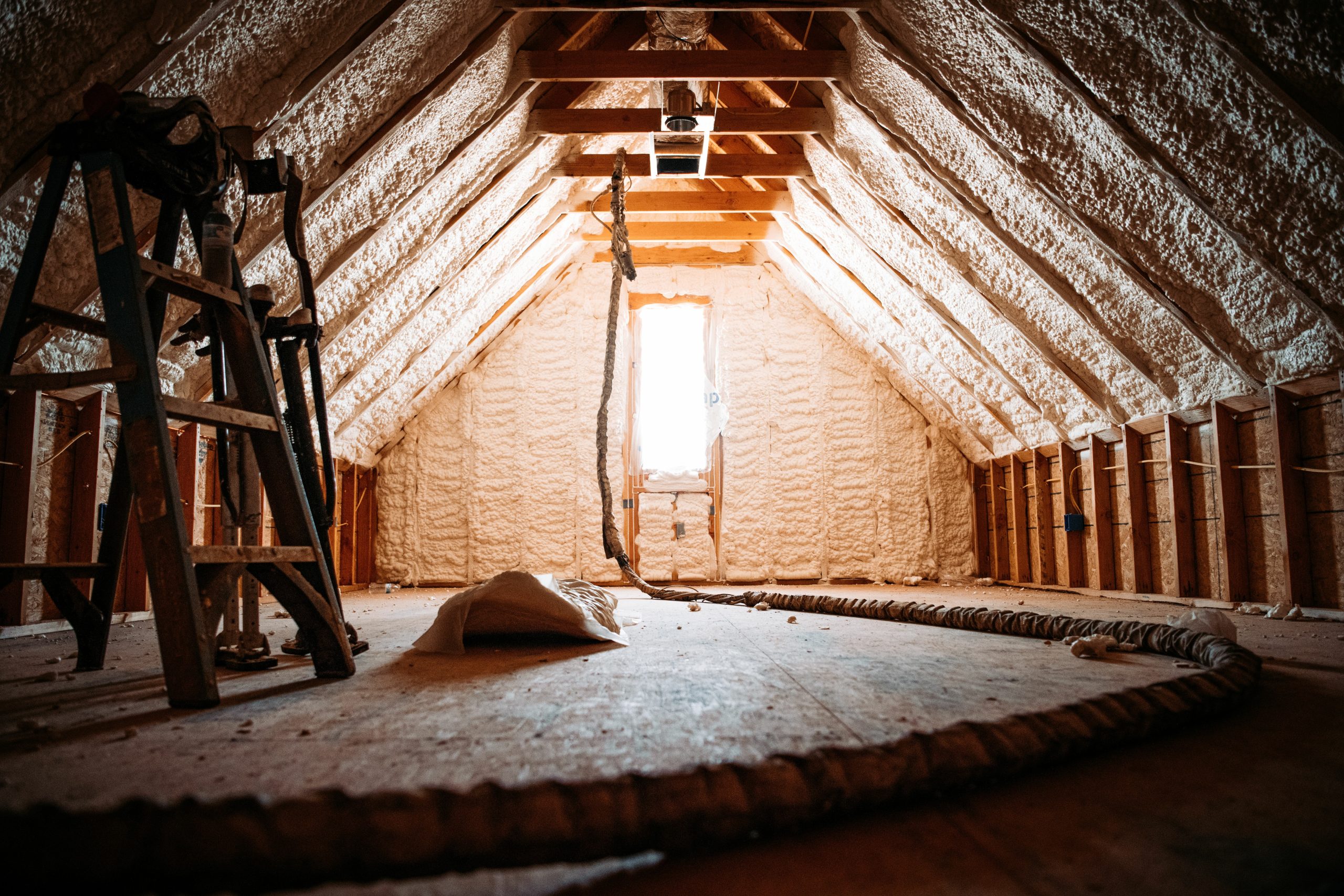
Spray foam insulation is applied as a liquid chemical spray that rapidly expands into a dense, solid foam. It fills every crack, gap, and irregular void, making it the most comprehensive thermal and air barrier available.
Pros & Cons of Spray Foam
- Pros: Delivers a 100% airtight seal that stops drafty air leaks entirely. Offers the highest R-value per inch of any insulation type. Closed-cell spray foam is completely impervious to moisture, eliminates condensation (“sweating steel”), adds structural strength to wall assemblies, and never sags or settles.
- Cons: Higher initial upfront investment compared to fiberglass or cellulose. Requires specialized commercial equipment and certified professional installers.
Best Use Cases
The absolute best choice for metal post-frame buildings, heated workshops, barndominium wall cavities, unvented attic roof lines, and crawl spaces needing complete moisture control.
How to Choose the Right Insulation for Your Building
To select the ideal insulation material, evaluate your project based on four key factors:
- Initial Budget vs. Long-Term Energy Savings: While fiberglass and cellulose cost less upfront, spray foam and rigid foam pay for themselves over time by drastically cutting monthly heating and cooling bills.
- Thermal Performance & R-Value: Spray foam and rigid foam deliver significantly higher thermal resistance per inch, allowing you to maximize efficiency in standard wall cavities.
- Moisture & Condensation Risks: For below-grade basements, concrete slabs, or metal roofs prone to sweating, closed-cell spray foam and rigid XPS foam are the only materials that completely block moisture migration.
- Structural Longevity: Spray foam maintains its full thermal rating for decades without sagging, shrinking, or needing replacement.
Why Quality Construction Recommends Spray Foam Insulation
At Quality Construction, we specialize in professional spray foam insulation because it delivers unmatched energy efficiency, structural integrity, and moisture protection for buildings in Northeast Wisconsin.
Whether you are building a custom barndominium, insulating an agricultural workshop, or upgrading an existing home in Cecil, Pulaski, Bonduel, or Shawano, spray foam delivers the ultimate protection against harsh sub-zero winters.
Ready to lower your heating costs and eliminate indoor drafts? Contact Quality Construction today to schedule your on-site insulation consultation and get a free estimate!
