
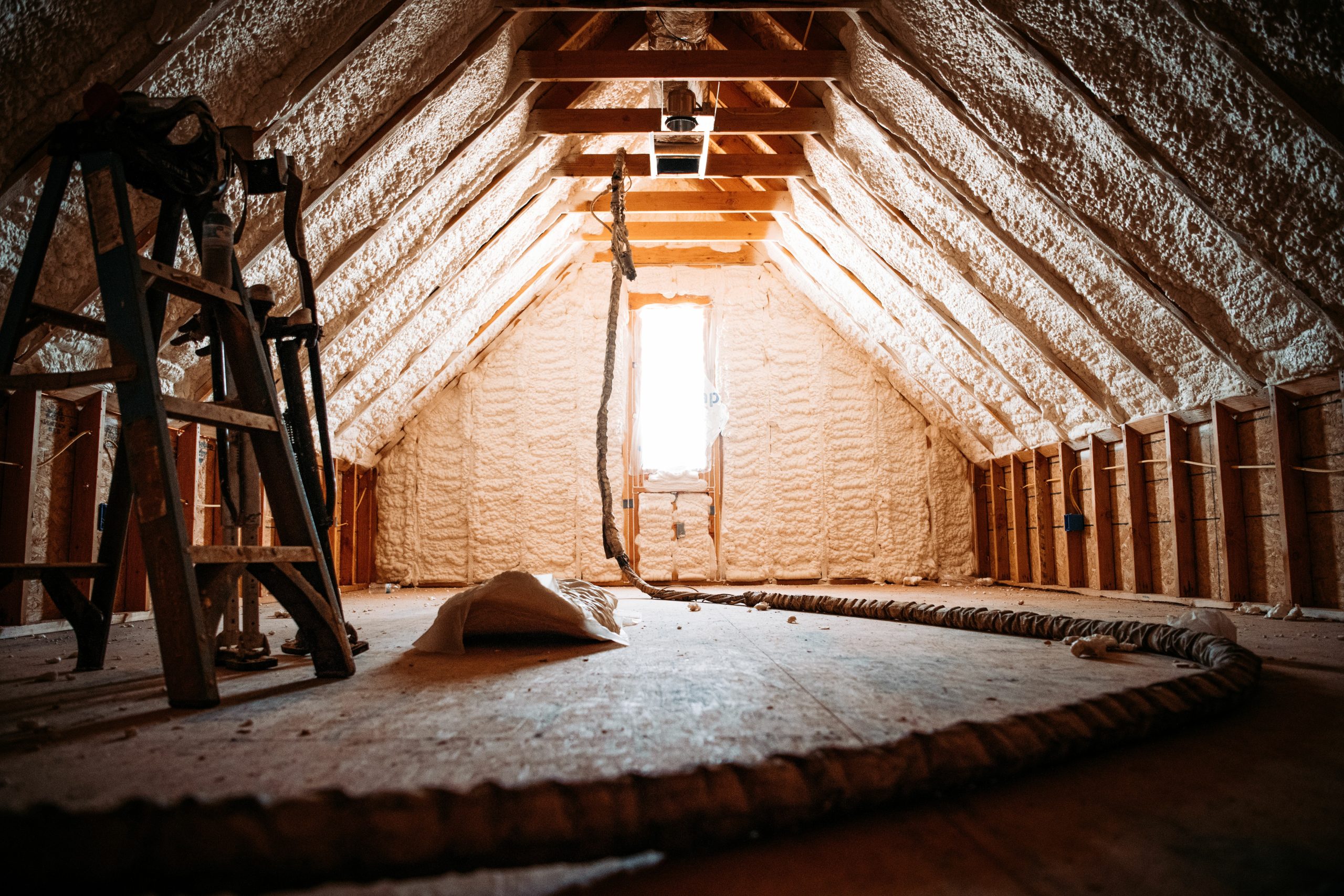
Insulation is often viewed as a simple temperature control solution. In reality, it plays a much larger role in how a building performs day after day. In pole barns, workshops, and post-frame structures, insulation directly affects energy use, moisture control, and the overall lifespan of the building.
Spray foam insulation provides more than thermal resistance. It creates a sealed building envelope that improves efficiency, protects materials, and contributes to long-term operational performance.
Air Sealing and Thermal Control
Traditional insulation methods focus primarily on slowing heat transfer. Spray foam goes further by sealing gaps, seams, and joints that allow air to move in and out of the structure.
Air infiltration is one of the primary causes of energy loss in metal and post-frame buildings. When outside air enters freely, heating and cooling systems must work harder to maintain interior conditions. Spray foam reduces this uncontrolled airflow, creating a more stable interior environment.
The result is improved temperature consistency and reduced strain on HVAC systems.
Moisture Control in Metal Buildings
Metal buildings are especially vulnerable to condensation. When warm interior air meets cooler metal surfaces, moisture forms. Over time, this can lead to dripping, damp insulation, corrosion, and damage to tools or stored materials.
Spray foam insulation adheres directly to the metal surface, forming a continuous barrier that limits condensation. By sealing gaps and reducing temperature differentials on interior surfaces, it helps prevent moisture buildup before it becomes a problem.
Controlling condensation is essential for preserving structural components and maintaining a clean interior environment.
Energy Efficiency Over Time
Operational efficiency compounds over the life of a building. A well-insulated structure requires less energy to heat in winter and cool in summer. This translates into measurable savings year after year.
Beyond energy costs, a stable interior temperature improves usability. Workshops remain comfortable in extreme seasons, and equipment operates in more consistent conditions.
Spray foam supports this long-term efficiency by maintaining performance without settling or shifting over time.
Protecting Equipment and Interior Investments
Humidity and temperature swings affect more than comfort. They impact machinery, stored materials, and interior finishes.
High moisture levels can contribute to rust, corrosion, and deterioration of sensitive equipment. By sealing the building envelope and reducing humidity fluctuations, spray foam insulation helps protect valuable investments inside the structure.
This added layer of protection strengthens the case for proper insulation as a long-term operational decision rather than a simple upgrade.
Spray foam insulation improves more than temperature control. It supports air sealing, moisture management, and energy efficiency while helping protect the structure and its contents.
When insulation is treated as a performance component rather than an afterthought, the entire building benefits. For pole barns and workshops designed for daily use and long-term reliability, spray foam plays a key role in supporting operational efficiency.
