
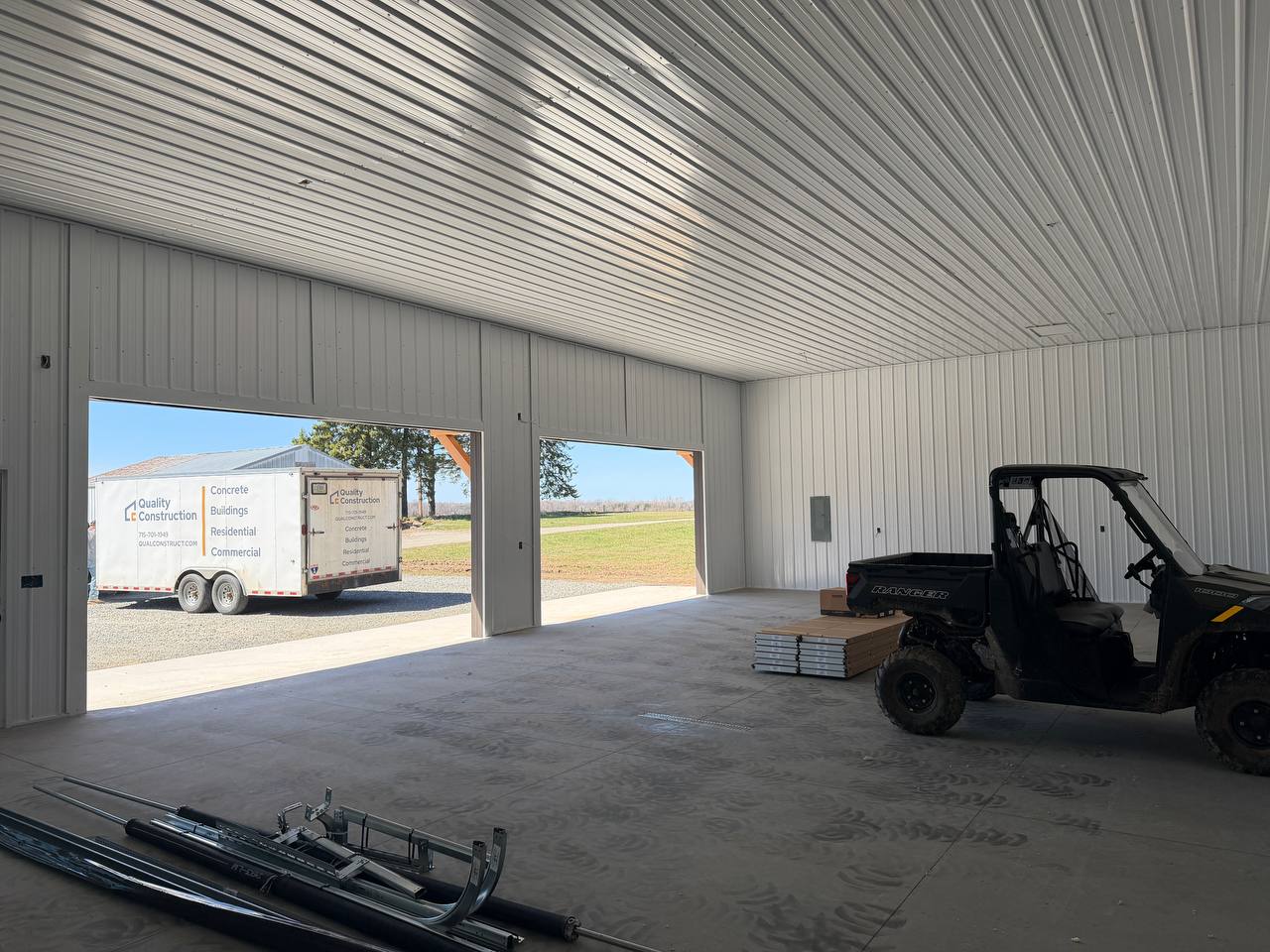
The Spring Humidity Struggle in Northeast Wisconsin
It happens every year around May in Northeast Wisconsin. The winter frost is finally gone, the outdoor air is warming up, and the humidity starts to roll in off the lakes. You walk out to your shop or garage, and the concrete slab looks like it was just sprayed down with a hose. Your tools are slick with moisture, your cast-iron tabletops are starting to rust, and the floor is a dangerous slip hazard. This frustrating phenomenon is known as a “sweating slab.” It isn’t a leak, and it isn’t a problem with your concrete mix; it’s pure physics. Fortunately, if you understand why it happens, you can take steps to stop it.
The Science Behind the “Sweating Slab”
To fix a sweating garage floor, you have to look at what’s happening underneath the surface.
The Concrete Dew Point
During a cold Wisconsin winter, the ground beneath your garage freezes solid. Because concrete is a dense material, it holds onto that cold deep into the spring. When warm, moisture-heavy air suddenly rolls into the Cecil and Shawanoarea, that warm air hits the cold concrete slab. When warm, humid air meets a cold surface, it reaches its “dew point” instantly. The moisture in the air turns to liquid right on your floor. It is the exact same process that causes water droplets to form on the outside of a cold glass of ice water on a hot July afternoon.
The Danger of Rising Moisture Vapor
In older or poorly constructed garages, there is a secondary culprit: capillary action. If the builder didn’t put down a proper barrier before pouring the slab, moisture from the damp spring soil will actually travel upward through the porous concrete. This adds to the puddles and creates a non-stop cycle of high humidity inside your shop.
How to Combat a Sweating Floor This Week
If your current shop is suffering from a wet floor, there are a few immediate adjustments you can make to manage the moisture.
Manage the Airflow
- Keep Doors Closed During Humidity Spikes: It sounds counterintuitive, but opening the big overhead doors on a hot, humid morning will just let more wet air hit that cold slab, making the sweating worse. Keep the building sealed until the outdoor air dries out.
- Circulate the Air: Set up high-cfm fans to keep air moving across the floor. Moving air helps evaporate the surface moisture before it can puddle and ruin your equipment.
- Switch to LEDs: Old shop lights generate heat, which can raise the indoor dew point. Upgrading to modern LEDs keeps the air temperature stable.
How We Build “Sweat-Proof” Shops for a Lifetime
If you are planning to build a new garage or hobby shop this summer, you don’t have to live with a wet floor. At Quality Construction, we engineer the moisture out of the building before we ever pour the first yard of concrete.
Sealing the Envelope with Spray Foam
To stop the airborne humidity from creating condensation, we create an airtight seal. By utilizing High-Performance Closed-Cell Spray Foam Insulation on the walls and roof deck, we lock out the thick Wisconsin humidity. Because the indoor air stays crisp and dry, the dew point is never reached, and your slab stays bone-dry year-round.
Build It Dry. Build It to Last.
A sweating garage isn’t just annoying; it ruins your tools, destroys your storage boxes, and creates a hazardous workspace. Don’t build a garage that turns into a sauna every May. Contact Quality Construction today to get your upcoming garage or workshop on our summer build schedule, and let’s construct a space that stays dry, safe, and comfortable for decades.
