
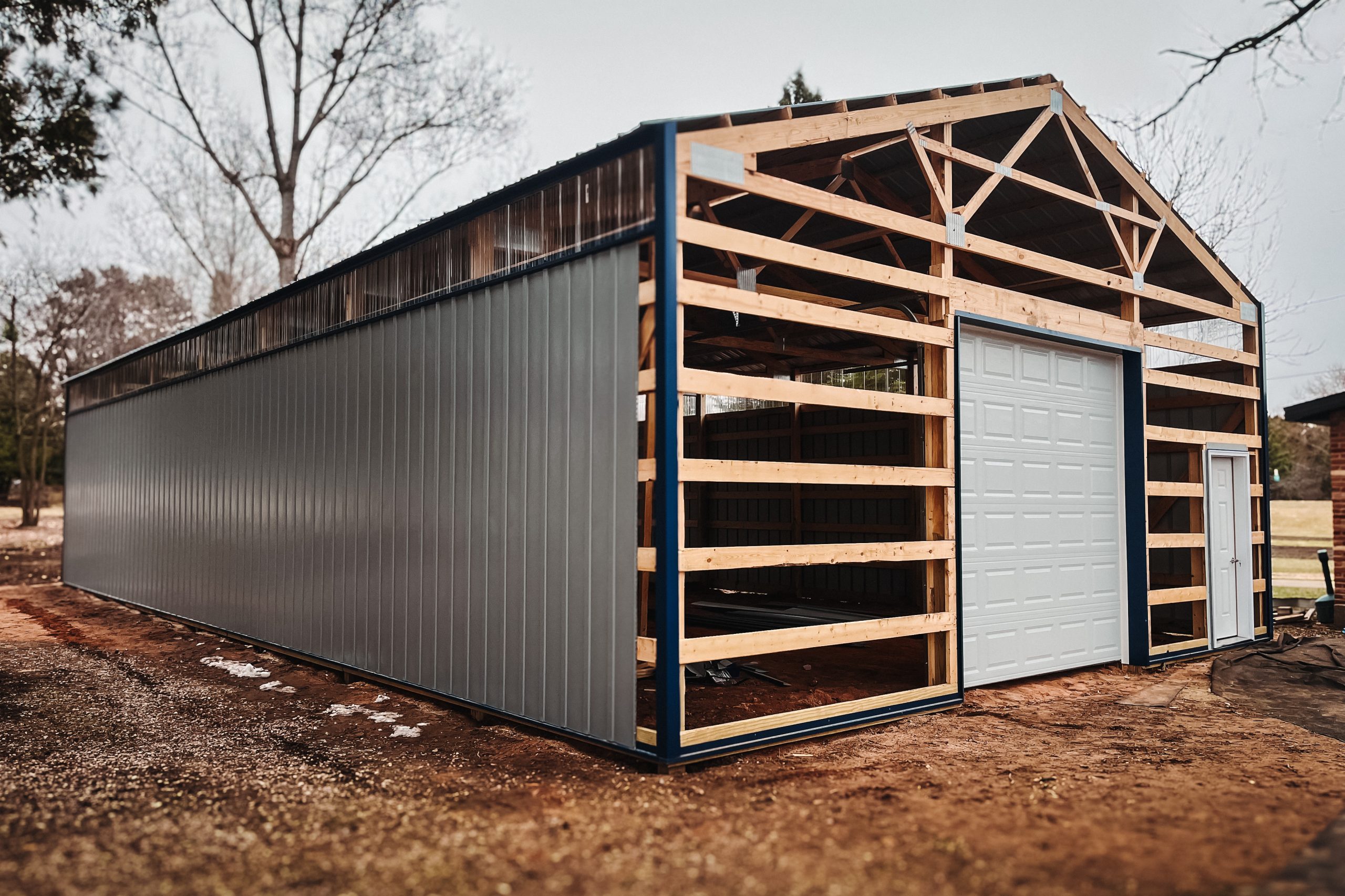
Building a pole barn is one of the smartest investments you can make for your property, whether it’s for storage, livestock, or a workshop. But while pole barns are known for their efficiency and affordability, even small mistakes during planning or construction can lead to costly issues down the road.
At Quality Construction, we’ve seen it all: barns built too small, foundations not deep enough, or ventilation systems forgotten until it’s too late. To help you get it right the first time, here are the five most common mistakes people make when building a pole barn, and how to avoid them.
1. Choosing the Wrong Site or Orientation
It all starts with location. One of the most common (and expensive) pole barn mistakes is building on an unsuitable site. Low or poorly drained areas can lead to water pooling, foundation damage, or mold issues inside your structure.
When planning your site:
- Choose high, well-drained ground whenever possible.
- Consider sunlight exposure to maximize natural light and help dry out the area after rain.
- Leave enough space around your barn for easy access and future expansion.
Pro tip: Plan for truck or tractor movement. If you’ll be driving large equipment in and out, you’ll need turning space and strong access paths.
2. Skipping Proper Foundation or Post-Setting Depth
A strong building starts below ground. Too often, inexperienced builders or DIY projects skip proper post depth or fail to account for local frost lines.
If your posts aren’t deep enough, the building can shift or heave during freeze-thaw cycles, especially in Wisconsin.
Always make sure:
- Posts are buried below frost depth (usually 4 feet or more).
- Proper concrete backfills or precast footing pads are used for stability.
- The ground is leveled and compacted before framing begins.
At Quality Construction, we follow strict post-frame construction methods to ensure every barn starts on a solid foundation.
3. Underestimating Future Needs
It’s easy to think, “I only need space for my tractor,” but a few years later, you’ve got more equipment and nowhere to store it. Building too small is one of the most common regrets pole barn owners have.
When designing your barn:
- Plan ahead. Consider future equipment, storage, or animals.
- Add extra height if you might upgrade machinery or add overhead doors later.
- Leave room on your property for potential additions.
Remember: it’s always cheaper to build a little bigger now than to expand later.
4. Ignoring Ventilation and Moisture Control
Ventilation may not seem exciting, but it’s critical for the longevity of your structure, especially if you’re storing vehicles, hay, or livestock. Without proper airflow, moisture builds up inside, leading to rust, rot, or mold.
To prevent this:
- Include ridge vents, eave vents, or cupolas for natural airflow.
- Use vapor barriers or insulation to prevent condensation.
- Consider spray foam insulation if you plan to heat or cool the space.
Good ventilation keeps your building, and everything in it, in better condition year-round.
5. Choosing Price Over Quality
Budget is always important, but cutting corners on materials or labor can cost more in the long run. Cheap poles, thin steel, or inexperienced builders often lead to repairs, leaks, or structural failure.
When comparing bids:
- Ask about material specs (gauge, post treatment, fasteners).
- Check the builder’s track record and references.
- Remember that a well-built pole barn should last 40–50 years or more with minimal maintenance.
At Quality Construction, we use high-quality materials and proven building techniques to ensure your pole barn performs for decades, not just a few seasons.
Building a pole barn is an exciting project that adds real value to your property. By choosing the right builder and paying attention to details like site prep, structure size, and ventilation, you’ll save yourself time, money, and frustration.
Whether you need a custom workshop, storage space, or agricultural building, Quality Construction is here to help you plan smart and build strong.
Ready to start your pole barn project? Contact Quality Construction today to schedule your consultation and get a free estimate.
